Book Review - The Brain Change Program
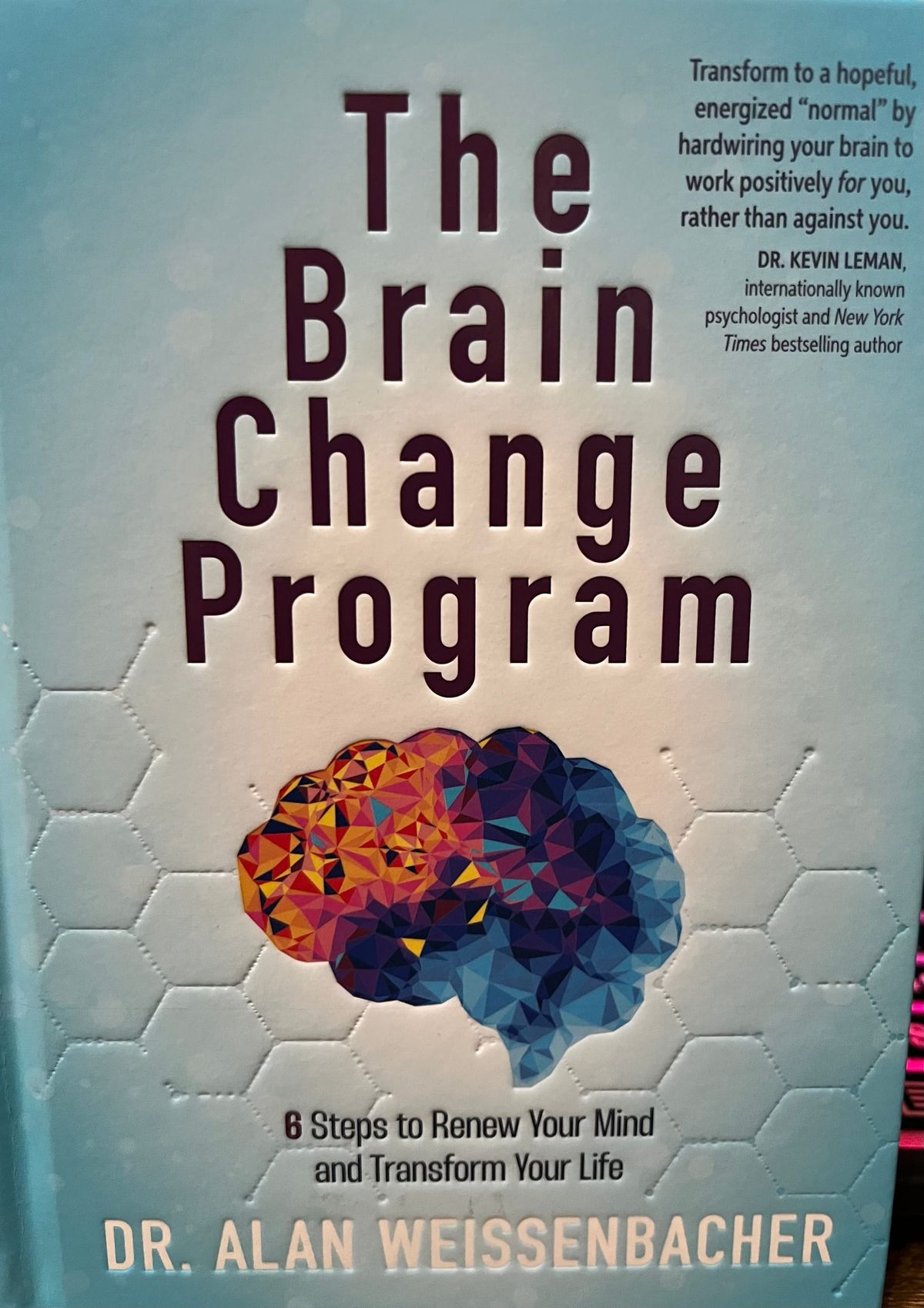
By Dr. Alan Weissenbacher
Anyone who know me, really know I am not an avid reader. Half the time when I pick up a book and read, I read a few pages, and get stuck on a paragraph I read about 17 times, but can't really grasp it and just give up. Then I hit books like this, that I rather enjoy, because it isn't one trailing thought per chapter; it keeps me interested with it's varying levels of change and effort from page to page.
Of course it has many threads in it about different ideas and thoughts, and the program is listed out in a 6 step process at the end of it. I'll be real honest; the practically on a "program" or "habit builder" or discovery tool... they really aren't for me. Not because they don't work, it's that I often get 1/4 into the process and I can see the end. I have been told I am a highly insightful person when it comes to myself. So when I read these books, I often take the idea out of it and it helps me with my life - not necessarily that whatever they design.
Without further yapping from myself, here's the review.
What is this book?
Instead of just copy/pasting the summary here, I'll provide some insight by what I read. The author is Christian, so it's definitely a Christian book with Scripture and Biblical references in it, but the approach of the book isn't really "God first." It's more about you and the way you think, and how to become God first, but it can also apply to you if you aren't Christian.
He attempts to use science and studies to prove how our brain works to help us live better lives, break habits, and become who we wish to become. It's not a long book though - somewhere in the wheelhouse of < 200 pages. It's a very rapid fire type of book where he doesn't spend 15 pages on a single example. Every couple of pages he is moving on to different topics, examples, and studies. He also highlights specific statements in there. It's also fairly small
Know however it isn't some scientific, filled to brim with crazy language type of book either. He's very personal and takes the time to describe the science-like language to you as a person without 15 years of experience in the field. He takes real world examples and experience to apply what he's learned, some even in his own growth.
A very interesting read. Let's talk about the topics.
Accountability
He first tells you to join a church, find a community, or use friends and family to help you get where you need to go. You can't really do it alone, and I get it. He also reinforces this several times in the book.
It's really hard when you have an open road, and no one to point out dirt paths, obstacles, and things you're doing unconsciously, so you need help. And while I don't think he outright says it, he's basically saying many time throughout the book, you need accountability.
Use It or Lose It
I mean, it's pretty self-explanatory. If you are constantly doing something, you'll remember and automatically build connections to the things you're doing and the mindsets you're in.
If you're always angry, your mind thinks angry is the default and that's where you're always supposed to be. You inherently get angry with anything that happens to you. On the flip side, if you constantly practice empathy, your brain will build connections that kindness is the default.
He also kind of touches on how you can alter your mind simply by thinking and practicing different things, a "fake it until you make it" thing as he puts it. You keep thinking and doing the things you want, eventually they become second nature.
There's... brain and science terms in there, but I can't remember exactly what they were. That's the point though.
Nuero-linking (Or Something Like that)
This whole concept is how our brain links things together. If you were bit by a spider and it hurt, your brain links spiders with pain. If you get in a bad car wreck, you might be overly cautious because your brain built a link.
He touches on how these links become "automatic" in a way, like a habit or a ritual you do. They just become second nature because your brain is making links.
He goes through the effort of telling you how natural it is, but also how you can change it. Your bad habits, links, and things he describes as a "super highway" in your brain, and your brain always take the easiest route to comfort, which is the highway. You must find the dirt road and turn that into a super highway so your current highway can fall apart back into a dirt road.
Point being, it takes time and intentionality. You're going to fail, and you're going to need to keep cruising and not be weighed down by judgement. Keep building the road.
Imagination
The last informational part of the book before the steps is about imagination. There's a few points he makes, I'll hit the ones that stood out to me.
He spend a little bit of time explaining how our brain perceives the way we imagine things... which is basically as if they were real. Of course, consciously we know if we dream about breaking a window in our house, we aren't going to break it. However, the more we dream and conjure stories in our heads about breaking the window... the more our brain is like "yeah we can break windows," therefore the closest it comes to being reality. When Jesus talks about it coming from the heart, I imagine that this is a bit of it.
He also ties this in nicely with the previous points; if we're constantly imagining being kind, practicing empathy, and doing the "right" things, the more naturally those things are going to come out over time. The opposite also applies; if we're constantly thinking about revenge, being angry, or being aggressive, the more likely we are to be that way in real life situations.
Basically you become what you imagine.
Final Thoughts
So the last chapter is the 6 step brain change program... but that doesn't often work for me. I see organization and my brain checks out... rather immediately. It's not a bad program. Identify, evaluate, replace, imagine, and a couple of others. I'll just pretend I'll remember and say "I don't want to spoil it for you!"
In all seriousness, it's a very good book that gives you a lot to think about in a very rapid format. For an avid reader without ADHD, you could probably get through the book in like... one sitting. Even then, it took me on and off about 6-8 sessions over the course of 4-5 days. I have already taken a lot into consideration already and feel myself changing quite a bit.
I would say that a lot of it has you reflect on yourself more than anything. It doesn't have you go out into the world and do anything weird... no, it actually attempts to have you change in your brain. Start linking new roads, start imagining more positive things, and using the parts of your brain that help you be more successful, or at least at peace. I find myself in negative thought and connecting the dots there that I don't want that, and I change to something more positive. It feels weird, awkward, and it's very comfortable in general, but what comes out of me is much better than it was before.
Pick it up. It was 10$ at Walmart and worth it.


