Music in The Current Age
Hi.... here's the video that sparked me to make this article - Is Music Officially Dead? Steve Terreberry - and while this particular YouTuber takes a goofy approach, he's not the only one to make a video like this. I've seen it so many times over the last several years; is rock dead? Is music dead? "It was better in the 80's," streaming killed things, and all that jazz. What I find so interesting, is that the topics always seem to center around some sort of nostalgia, and folks feeling hyper attached to records they listen to in their youth, and especially around the way they had to get the music.
My opinion is a little different here; I don't think music is dead, in fact I think it's more alive than ever, and I think a lot of people just don't actually see it, because it's not as easy to spot anymore.
Not that I am some big music genius or anything, but I've always been exposed to music since I was kid like 30 years ago, and 21 years ago I started playing an instrument. I had friends who loved music. I went through most of the phases of the technology advancing and got to feel a lot of eras of how music evolved over the last 20-30 years.
Media Evolution
Let's just real quick recap the evolution of how we listened to music. Nothing super in depth, I just want to highlight a couple of very simple things; how you had to listen to the music you wanted and how you had to get it.
- Before technology in general, before even tapes and radio, it was obviously live. You were at a party, you were at an event, or you purposely went to a concert to listen to music. If you wanted more, you had to keep returning to those events, and likely you weren't traveling the world so you were limited to whatever was in your area.
- Radio/TV - oh hey, check it out. You could buy a radio, set it in the living room, tune into a station and hear some music. Also, sometimes on TV stations there was music being played. Now instead of traveling you could listen from home, but you were still kind of limited to your area, because there was no internet, you couldn't listen to some black metal band from Norway in Oklahoma city. Nope, it was still local.
- Tapes - Interesting... so now you can CHOOSE what you listen to? Of course, limited to what was in stock at the stores that sold them, which were music stores mostly. However, you also had to have enough money to buy a tape player. You are also only limited to the band/artist you purchased.
- Note as well, while I didn't live it, I did hear from folks older than me that with tapes, there was a big "trading" thing that happened over the years. You found friends who listened to a band, you listened to a band, and you would trade tapes. Another way to find new music.
- Music Videos - Wait what? Not only can a band release a tape, but you can also SEE them on the TV? Oh wow! Still, it was limited to who made a music video and how popular it was.
- CD's - Okay hey, it's like tapes but less crappy. You could now not only buy and listen to your favorite music, but you now had the ability to select songs on the album you bought. With tapes, you only had rewind and fast forward, but CD's, they separated the songs, so if you didn't like a song, you could pick another. This also made music a little cheaper and a little more accessible.
- The Internet (non-streaming) - Now we have on demand things. Not much though, they were mostly sites where you could illegally download music. It took a while and it came with a lot of risk... assuming your family had the money to have a computer, and you couldn't do much with it.
- Now eventually companies started getting the idea... well dang if everyone's just going to rip off my music anyway, we need a better, more official and safer way for them to do it. Hence you could digitally buy music with iTunes or similar platforms.
- MP3 Media - Digital media was now a thing, but of course, the world was used to walking around with handheld tape and CD players... so digital media had to catch up. So what you'd do is purchase the music you wanted digitally, and you'd have an MP3 player that you'd hook up to a computer, and you could put a limited amount of songs on them. Either that, or you could select songs you want and burn them onto a CD - which meant you could make your own CD collection of songs.
- Note as well, it didn't take long before we got Zunes, iPod's, and similar devices, things that were hooked up to places where you could buy music, easy to use systems, and they stored far more music than the 10$ player you got from Walmart. Your choices now were only limited to the amount of money you could shell out.
- Enter Streaming - Basically this is where we ended up. Technology evolved. Now that we have the internet in the palm of our hands, music had to also have that same kind of accessibility. With the likes of Netflix, YouTube, and streaming services for everything, that left music to REQUIRE to be the same thing. Now for the price of one album a month, you can listen to music from around the world at your leisure and choice.
When you break it down like that, you very well see it as a positive... at least I do. It took control away from legacy media and the brainwashing of a single album, so now we have a choice.
Addressing Arguments
I want to first just highlight a lot of what people bring up in today's culture around what music has become. I am sure, especially if you're a musician, you've heard most of these. That's okay. Let's talk about them.
"You could only..." - This idea that you could only read lyrics with the booklet, you could only have a limited amount of albums, you could only listen to one CD at a time... yeah, okay y'all. Why does everyone fantasize this stuff? Switching CD's sucked. Remembering to take them places sucked even more. The radio only ever played 1 song you liked out of 5 half the time. You'd mishear lyrics and look like an idiot in front of people. When we got to MP3 days, it took an ETERNITY to pick and upload the songs, and half the time you couldn't find them and had to rip them from YouTube. My gosh, y'all. Get over it. Streaming is much better.
"Owning" Things - That hasn't stopped. Can we now stop pretending like it has? Bands, labels, and artists still release merch, including but not limited to CD's, vinyl's, limited editions, shirts, posters, etc. What has changed is that I don't need to "own" something to listen to the music. I can do that whenever I want now. And to the artists, your target for that merch is different; it's who can and feels invested/connected enough to buy it.
"No One Listens to Albums" - ... and? The way I see it honestly, it's just an extension of who we were to begin with. There were plenty of people, and I met them, that would buy a CD or something because they heard a radio hit and never play the rest of the album. Nothing's changed. We just now have the freedom to make a choice. We don't have to waste money buying a 15$ album with 12 songs to only listen to 2. We just pick the two we want to listen to.
"Music was better back then" - Nooooooooo... you just have a childhood or memory based connection to said music from "back then." Not only that, but you didn't have much of a choice, whereas we do now. There's plenty of great, fantastic, and amazing music out there nowadays; you just are so stuck in this mindset that you aren't willing to let anything in. Or, you're not willing to go and find it, since it's not being fed to you anymore.
"It's not about the music anymore" - Okay, and who's fault is that? Ours. All of us. Collectively. Labels need to make money. If they can't make anything off of streaming, but if they can drive a bunch of traffic to social media, to beefs, to accusations, to events, and make the artist the thing that makes money... then that's what they're going to do. But also, music is what you make it. If you don't like it, find something else.
Look there are some arguments I do agree with, but the point of the article to against all these accusations of music being crap.
Social Media
Personal Connection
Legacy artists and musicians probably felt this shift more than others. Music is so accessible and you can no longer control an audience without building it first, and how do you do that? By building a brand (we'll get back to that in a bit). Social media the medium to which you build it.
Let's also consider something else that has changed in the past few decades; the connection to the artists themselves. You know, in the 90's, even the early 2000's, you really didn't have the opportunity to learn about the people behind the music. You could catch some interviews here and there, see them perform on stage, maybe even pay for some backstage passes. Oh yeah, and does anyone even remember the VH1 Behind the Scenes? I used to record those on the VCR and watch them over and over. You learned a lot about them... but only what they'd let you see.
Part of what you build... revolves around you; the person making the music. Even if it's behind a mask or a persona, it has to be there. People nowadays want to know that there's people behind the curtains. They don't just want your stage presence and music... no they want you as a person. This my friends, helps even some of the worst music become relatable.
What's strange in society nowadays is we have this idea of para-social relationships. It's where you don't actually know a person, but you interact with them in some way that makes you feel a little bit more connected to them than just being a musician. You're a human, and the more likeable you are, the more likely someone is to click and listen to your stuff and make connections that they likely wouldn't have before.
Creativity Galore
This is where you get the argument from your 50+ year old YouTuber that "music was just better in the 80's." Was it though? Or was is that you could only hear what they wanted you to hear, and there were new sounds that you hadn't heard before because not everyone was making music? People pretend like every era isn't filled with slop and garbage bands - I assure you there was, they just didn't often make it to the mainstream.
If you go back to when say Jimi Hendrix was around, it was kind of hard to get an instrument and learn it. Even if you happen to find one and your family could afford it, there was no way in hell you were going to record anything. By the time we hit the 80's, the things you could use to make music broadened. The idea of simply piano or guitar based music was growing with the wave of electronics, distortion, and many other things. As you get into the later generations, everything just became more and more accessible to anyone with a computer. Now, you can be 10 years old, download a couple of free programs, and make music. It's that easy. It's not hard, you have no excuse or limitations. It's all about you and what you want to do.
Also though, you aren't limited to anything specific either as far as sounds go. In the 80's you had country, various forms of rock, and some oldies, maybe blues and classical. In deeper parts of the country you had things like bluegrass. Nowadays... well what do you want? Anything is there. You can find it. Not only are there like... I don't know 15-20 "main" genres, but there's also subgenres underneath each. Rock has light rock, classic rock, pop punk, heavy rock, psychedelic rock, noise rock, etc. - I would think you'd be hard pressed NOT to find something you enjoy in there. I used to be one who argued against the "subgenre" classifications, but as I get older and more refined on what I enjoy... I get it now. If I am trying to listen to metal, I already know I don't like black metal, OSDM, or power metal, and with those classifications pretty clear, I already know to avoid them, making my search for tech and melodeath a lot simpler.
I'll get into this in the next section, but "Mr. 80's was better" guy - it's not that music was better in the 80's; it's because they served you the music you liked on a silver platter. The sheer amount of creativity, music, and genres of today far outweigh the few things that came out in the 80's. We're in a better spot my friend, you just don't get it handed to you; you have to find it.
Choice And Preference
Here's the big argument that I always have in my head here; of all the people that claim... let's say "rock is dead" or something similar, I can hop on any streaming service imaginable and find plenty of unique bands, different sounds, or heck, even bands that sound like other bands.
They aren't dead. I don't care what stats show. The days of glam rock have dwindled from mainstream attraction in your city to a cult following, but the music itself isn't dead at all. It's alive and well, but if you aren't looking for it, then you won't find it.
Which brings me to my main point; the landscape of today has changed from where music was delivered to us, to where we are the hunters. If you don't want to hunt, then the scene will feel dead to you. If you are into some weird genre you grew up with, like say psychedelic rock, but you hop onto the front page of Spotify and see Taylor Swift, Olivia, Billie, etc. - and then hop off... then yeah. It's all going to feel helpless. Why? Because it's not the 80's, 90's, or even the 2000's anymore my friend. It's not about you anymore. It's about the hunt. If you want more psychedelic rock, then you need to go on Spotify, find playlists, go to albums you like and there's a "similar artists" section, and you need to start heading down a rabbit hole. Not seeing new music? Literally every streaming service breaks down things by genre and records that released that week.
I think a lot of folks have a hard time grasping this concept, because for the majority of the last 100 years, music has always been a game of exposure; and you as the listener basically would get exposed to new music and feel connected. In today's world, exposure means nothing in the way of what you hear. You hear radio, you hear stuff in movies, the grocery store even. The streaming apps also have limited space to expose you to anything - yeah when you open Apple Music the first thing you may see is Taylor Swift's new record, but you may not be interested in her music and just cruise past it. It's the nature of the new world.
The Business Side
Of course businesses do have a problem to solve here; if music is now your choice and preference, then how can they take their artists and make them known to you? And also, all these little tiny independent folks, how do they get found, if at all? That's right marketing. What's the source of what you market? A brand. Let's not act like this is a new thing though. This has been a real big thing since music videos came onto the scene.
Let's indulge your "80's was better" mentality for a second. In the 80's, what was one of the biggest things that came out of that era? Image. It was everything. If you were on the heavier side, you needed the long beautiful hair and leather outfits, or you needy some really bizarre nerdy look. If you wanted to capture attention, you needed visual media and electronic elements. It's almost like... you needed to have some sort of branding to succeed. Huh. Strange. It also continued into the 90's with the likes of grunge, boy/girl groups, etc. - and let's not pretend that genres like nu-metal or emo existed without all the imaging that came with it.
Most people think "branding" and they think infomercials, a logo, or some sort of sly slip of evil genius to get you to love what you're listening to. No, a brand is just simply something that let's people know what you're about and what to expect... at it's core. If you love pop music, learn how to make and produce it, and release stuff to the world without really considering what you're doing with it, no one knows you exist. When people spot your music, they need to connect in some sort of way to listen... is it the album cover? Is it your name? Is it the music style? Is it an interesting logo? Is it you?
For example - if you're a person who likes metal, and you're searching for new music on a broad playlist looking at albums covers... are you more likely to click on an album that has an emotional girl dressed in a cowboy outfit on, or are you going to click on the cover that has what looks like an interdimensional beast devouring planets and ruins all around it? Yeah, it's an extreme example, but point is; the branding does matter. If I were to delve a little deeper into say metal, let's say you love some good ol' fashion just death metal. As you're looking through the new albums in the metal genre... are you more likely to click on the album that has gore, green goo, and rocky rigid lettered band name, or the cover that has a raven on the front of it and the lettering looks pristine and metallic? You're going to click on the first one... why? Because the raven is simplistic, and the lettering of the band name is kind of old school... you listen to death metal and by that cover, you probably assume that album is power metal or heavy metal and you probably won't like it. Again, the branding does matter here.
I also want you to consider something I mentioned about this before as well; social media is your bread and butter for branding. If you aren't on at least one platform putting out content, man you're toast. You'll remain at 2 listeners forever. Thanks best friend and mom. In order to sell music and make money... for lack of better words, they also have to sell the human. You as the artist needs to be relatable, transparent, and engaged.
Last thing for the business side of the house here is that music doesn't make the money it used to. Streaming has diluted album sales to practically nothing. Media is dependent on how much connection and interest you gain. Your merch isn't likely done in house, so you don't receive a good chunk of profits from it. The best way to make money, and it's always been and likely always will be... live performance and touring. You may sell 200 pieces of merch, got some sort of limited 1000 record vinyl shipped and bought, and have 3 million monthly listeners across all your platforms... and you still won't make even close to the amount you'll make on say, a costal tour of 10 cities. Even then, you have to pay a road crew, the bill to transport you and the crew, the stage setup, each of the venues want a cut... yeah. It's a lot of freaking work for what it's worth.
What's the point? Well I'll tell you, but I'll get back to it in a later section; they try and reproduce what they know already works.
Listening Habits
Music is no longer just in the car, on the TV, or reserved for people who are really into it; it's for everyone, everywhere, for any purpose. This has entirely changed the game, the accessibility allowing for basically anyone to get into people's ears making whatever hot gar— I mean beautiful art they do. What do you need? Are you a person that listens to a bunch of lo-fi instrumentals while you do your homework? Do you love to dance and do cyber punk outfits? Are you looking for a cool scene? Are you screaming out some lyrics on your drive? Do you need a pick-me-up because you're feeling down? Do you want to think? Do you need something while you're in the grocery store? Are you looking for some deep classical masterpiece to analyze and dissect?
You get the idea. The listening habits of people made music BOOM. Sure, we may not have like a Def Leopard, but in it's place you have a bunch of genres and fans of those genres listening. Maybe the days of rockstars are dead. That I can agree with.
Folks, I don't think this is a problem at all. In fact, I think it's beautiful.
What listening habits have done is help to diversify music. In the 80's, you had millions of people listening to the same 5 bands. In today's society, those same millions of people are listening to 10 different genres and 300 different artists. How is this not a great thing?
And lastly - listening habits have evolved from listening to albums. We now listen to playlists and singles. We discover clips off of social media. There's only specific genres who focus on making albums and the listeners who intake full albums. You can consider this a downside, but also... it opens doors that a lot of folks haven't really noticed yet. You don't have to have a full album's worth of material to release music. Make an EP with 3 songs. Someone will add one of them into a playlist. Drop another EP. Drop a single with a music video. Then maybe drop an album. Milk that album by turning a bunch of songs into singles.
The Only Problem
Okay, so yeah, there's many problems, but this one to me is the one that stands out the most. Remember in the business section where I said they will try and reproduce what works? That plays into the problem here. Also consider that pretty much anywhere with enough drive can release music, which means inspiration can likely come from a single source. Algorithms and search results pick up pretty much everything too.
The problem is that the pool of music has become muddy waters. It makes music extremely hard to find when you want to find something new.
I experience this in metal all the time. Lorna Shore makes it big. Over the next 2 years, every time I go to check out new albums, it's a clone, after a clone, after a clone, with a clone that does something a little different than the other clones. Next thing I hear is that "deathcore is making a comeback!" and there's 20 more bands out there that sound the same. Like dang bro. Chill out. I just want to find something cool, but I have to dig through 87 other bands that all sound like each other.
It also doesn't help that we end up listening in holes. What I mean by that, is we dig a hole into something we like, exhaust it, then move on to the next hole. It makes it really hard to have any staying power as an artist as well. You basically have a boom, then a fanbase that doesn't often change in numbers, unless you're doing something interesting or different, or that just generally has broad appeal.
Also, music is pretty much ADHD style now; where you listen to something for a month, move onto the next, and so on. It's rare you find someone who finds something new and listens to it forever.
Final Thoughts
I want to make a statement here, agree or disagree, I don't have it fully developed, and I am sure I'll hear multiple opinions on this in the coming years;
The idea of "Mainstream Music" is dead. And good riddance.
There is definitely some sort of "popularity" when it comes to music, what the vast majority of people listen to, but the mainstream of what was, is no longer there. It is rather a large rivers, and a bunch of streams beside it. You no longer need to be in the wave of the river, you can be wherever you want.
There will be no more Metallica's, Bon Jovi's, Beatles, Led Zepplins, Post Malone's, etc. - while yes, there will be celebrities and famous people, they will no longer have the broad appeal they once had. Taylor Swift to me, will be the end of that era completely once she either falls off or leaves music altogether.
Now music is more broad, creative, and optional than it ever was before. It's part of everyone's daily life at this point. It affects us, inspires us, and pushes us. And the accessibility to making and listening has little barriers now.
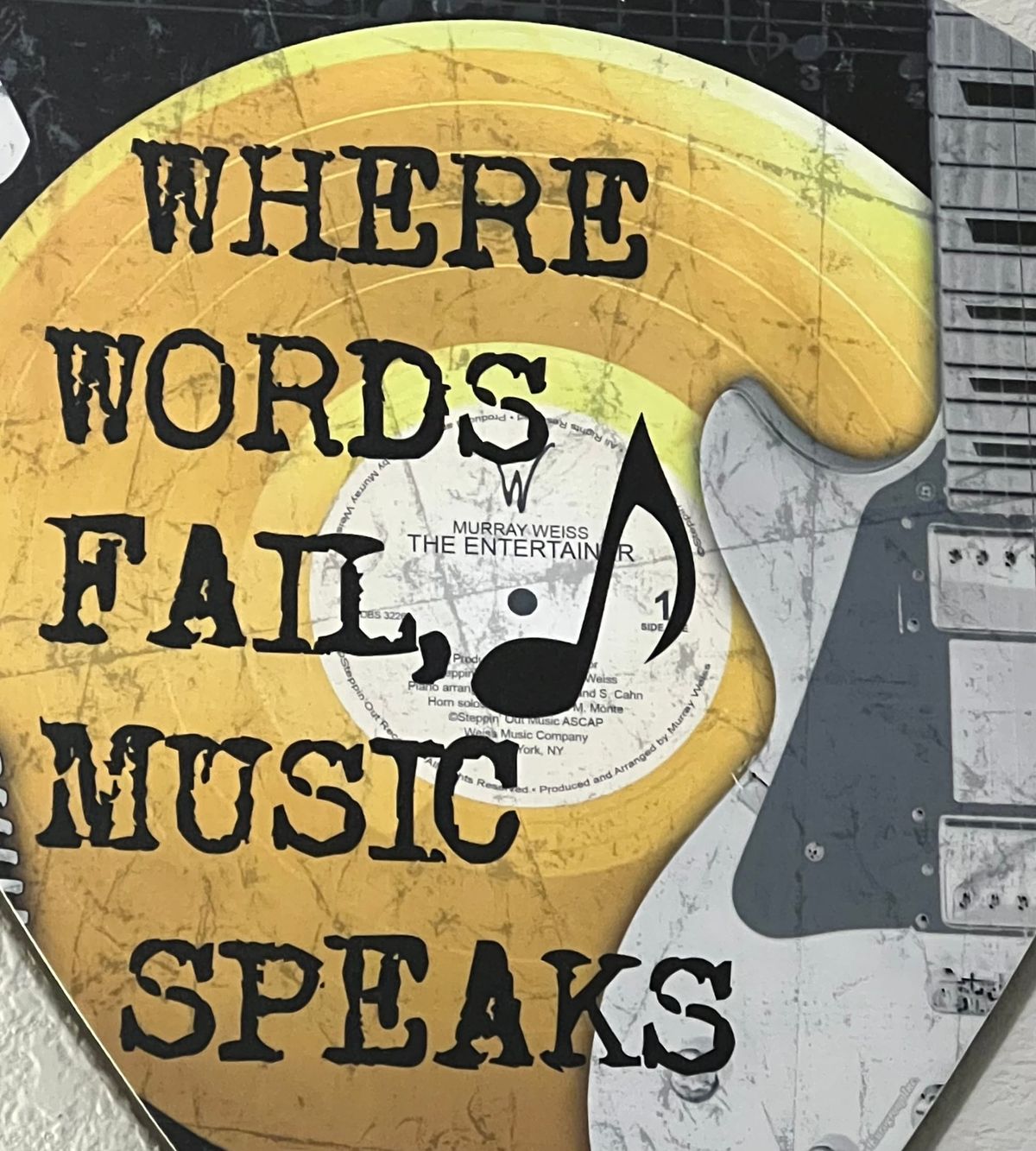
And this is a beautiful thing. It returns us to different state of music that never was - where it's a choice, it's intentional, and it's people connecting to people. I have this decorative item on my wall, which is the photo of this article that tells it all; music gives people something that they can't get anywhere else. It will continue to express things and touch souls where our words cannot.
It's just different now. And that's okay y'all.


